


Minister Le Manh Hung works with Department of Legal Affairs on key tasks and orientations for 2026
On the morning of May 19, Minister of Industry and Trade Le Manh Hung chaired a working session with the Department of Legal Affairs on the implementation of tasks in the first four months of 2026 and orientations for the coming period.
Reporting at the meeting, Director of the Department of Legal Affairs Ngo Duc Minh said the Ministry of Industry and Trade (MoIT) had faced “dual pressure” amid increasingly complex and unpredictable developments both internationally and domestically. Law-making activities in general, and those of the ministry in particular, had encountered numerous unexpected tasks requiring urgent and accelerated implementation.
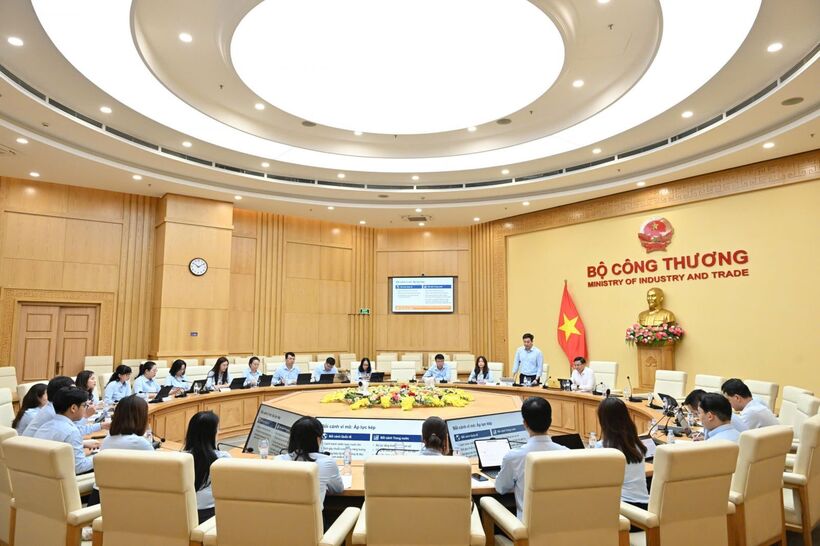
The overview of the working session. Photo: Can Dung
However, thanks to strong efforts and high determination, during the first four months of 2026, under the close direction of the Party Committee Standing Board and the minister, the Department of Legal Affairs, in coordination with relevant units under the ministry, completed a significant volume of work. Of the total 116 legal normative documents scheduled for submission and promulgation by MoIT in 2026, the ministry had completed 62 documents, equivalent to 47% of the annual target.
According to the department’s report, in 2026, the work on institution-building and legal improvement will focus on five core tasks. These include assisting the ministry’s leadership in effectively and timely implementing tasks assigned under Programme No. 12-CTr/BCĐ of the Central Steering Committee for institutional improvement; submitting to competent authorities the Strategy for improving the legal framework of the industry and trade sector in alignment with the sector’s development strategy; conducting a comprehensive review of the legal system governing the industry and trade sector and thematic reviews on institutionalising the Party’s guidelines and policies within the ministry’s functions and responsibilities, while reviewing decentralisation and delegation activities under the ministry’s state management scope.
The department will also take the lead in drafting amendments to four laws, namely the Commercial Law, the Competition Law, the Law on Foreign Trade Management, and the Law on Protection of Consumers’ Rights; urge and guide units under the ministry to complete 100% of tasks under the National Assembly’s legislative programme, the Government’s working programme, and the ministry’s working plan; participate in negotiations of free trade agreements (FTAs); and represent and protect national interests in major international investment dispute settlement (ISDS) cases.
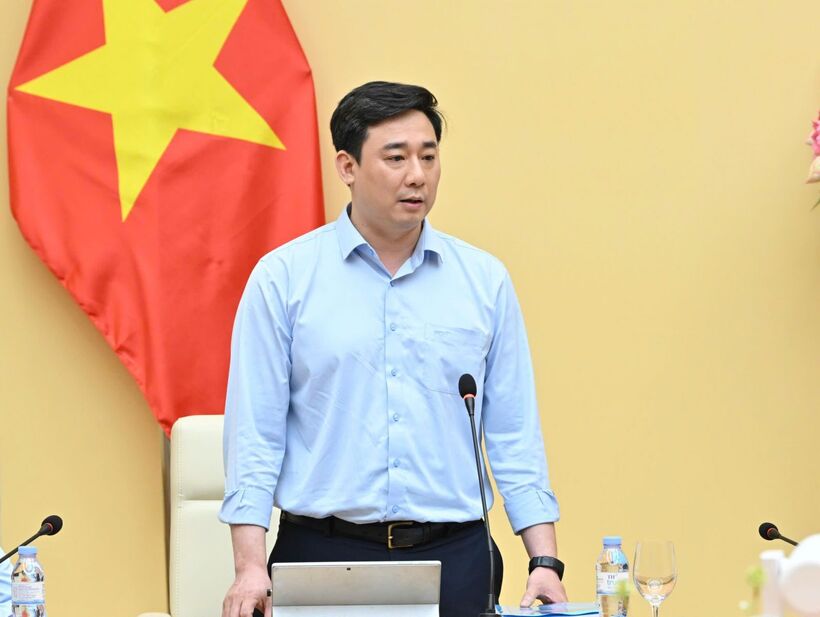
Ngo Duc Minh, Director of the Department of Legal Affairs, reports at the meeting. Photo: Can Dung
To fulfil the set objectives and tasks, the Department of Legal Affairs identified major risk groups that could affect task implementation and proposed solutions to ensure the ministry’s goals in building and improving the legal framework.
At the meeting, representatives from functional units under the ministry discussed and proposed specific coordination mechanisms and solutions between the Department of Legal Affairs and other units to enhance work efficiency.
Acknowledging the report of the Department of Legal Affairs and opinions raised during the meeting, Minister of Industry and Trade Le Manh Hung praised the efforts of officials and civil servants of the department for successfully fulfilling assigned tasks amid numerous domestic and international challenges, tight deadlines, increasing unexpected assignments, and increasingly complex and multidimensional policy impacts.
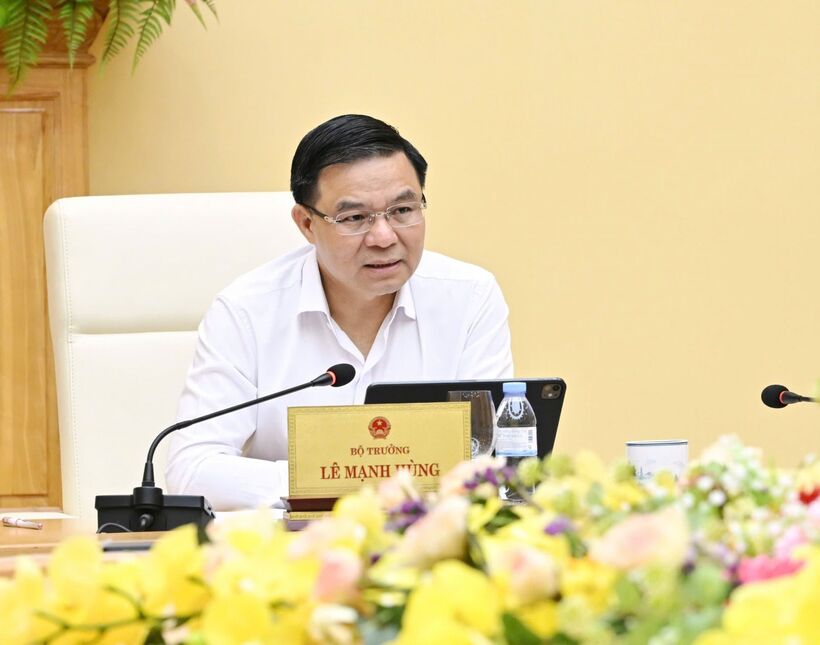
Minister of Industry and Trade Le Manh Hung delivers concluding remarks. Photo: Can Dung
To meet the goals assigned to MoIT by the Party, the Government and the Prime Minister, the minister stressed that institutions must be identified as one of the key driving forces and foundational pillars, and that the ministry must build an industry and trade legal framework with high international competitiveness.
Agreeing with the goals, tasks and solutions proposed by the Department of Legal Affairs, Minister Le Manh Hung further highlighted several important issues. First, the ministry’s law-making and institution-building work must shift strongly from a “state management” mindset to one of “national governance” and “development facilitation.” Accordingly, all policies and laws formulated by the ministry must place people and businesses at the centre, mobilise substantive and effective social participation, and remain subject to public oversight.
Legal normative documents submitted to the ministry for consideration and promulgation must include assessments of their impacts on affected groups and on the economy, while using practical data and information to ensure objectivity, comprehensiveness and feasibility.
The minister also noted that particular attention must be paid to law enforcement activities, including training, guidance and the organisation of implementation for promulgated legal normative documents.
According to the minister, alongside professional tasks, the Department of Legal Affairs should serve as the focal point for developing a contingent of officials and civil servants engaged in legal affairs in particular, and MoIT civil servants in general, with high-level expertise and skills in institution and policy building, considering this a key task for every official, civil servant and unit.
He requested relevant units under the ministry to study and propose appropriate policies and incentives in line with current regulations to attract and retain talent, with the aim of standardising the contingent of law-making civil servants, improving policy quality, enhancing governance effectiveness, and meeting increasingly demanding requirements in the development and improvement of the industry and trade sector’s legal and institutional framework.

